


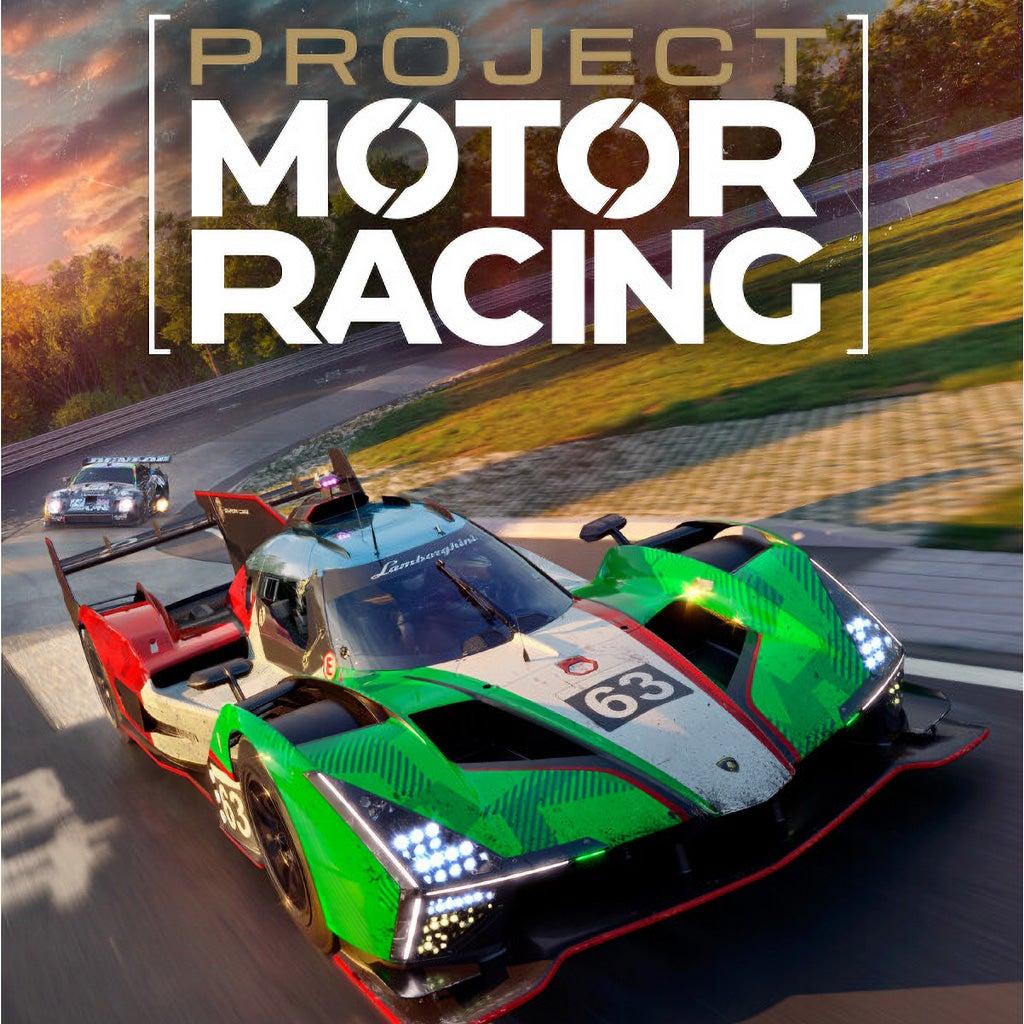
A Grand-Prix Contender, or a Total Write-Off?
The pursuit of the perfect racing simulation is a journey paved with burnt rubber and broken promises. For years, the community has yearned for a spiritual successor to the titans of the past, seeking a platform that marries the raw mechanical soul of a racing car with the cutting-edge technology of the modern era. When the pedigree behind a project includes the minds responsible for some of the most respected names in the genre, expectations naturally accelerate to breakneck speeds. However, as the lights go out and the pack thunders toward the first corner, one must ask: is this the definitive simulation we have been waiting for, or has it stalled on the grid? Read on to find out!
The Long Road to Glory
The central pillar of the experience is a structured career mode that attempts to mirror the financial and professional pressures of a real-world driver. Upon starting, you are given the choice of three distinct budget tiers, allowing you to begin as an amateur scraping for funds in lower-cost machinery or jump immediately into the cockpit of a top-flight LMDh Hypercar. This flexibility is paired with a sponsorship model where performance directly dictates your financial health; poor results or excessive repair bills can legitimately threaten your team’s solvency, which is, of course, how it would be in the real world. The variety of vehicles is impressive, featuring 70 licensed machines ranging from historic legends like the Lola T70 and Porsche 962C to modern GT3 and Hypercar icons. These are campaigned across 28 global track layouts, including laser-scanned recreations of the Nürburgring Nordschleife and Kyalami.
The Physics of the Apex
Underpinning the entire simulation is the Hadron physics engine. This system is designed to calculate vehicle dynamics from first principles, meaning that variables such as turbo lag, throttle response, and weight transfer are simulated with minute detail. There is also a Factory Driver Program, which utilised feedback from professional racers to refine the handling models. However, despite these efforts, the end result is, unfortunately, a polarising experience. While some cars feel communicative and rewarding through the force feedback, others exhibit inconsistent grip levels that can make them feel erratic. The surface model is highly sophisticated, featuring the True2Track system which allows for dynamic track evolution, including the formation of a drying line as rain ceases. However, the handling of most vehicles is so problematic that it quickly became my main focus in almost every instance as I paid the most attention to that, and not as much to my surroundings, which subsequently broke the immersion frequently.
The Heat of Competition
Online play is a significant focus, supporting up to 32 players in a single lobby with full cross-platform functionality. The infrastructure includes scheduled race events and a ranking system designed to pair drivers of similar skill and safety records. There are also weekly and monthly event rotations to keep the competitive scene active. While the potential for high-stakes multiclass racing is evident, the experience is currently hampered by an aggressive and often unpredictable penalty system. In both multiplayer and single-player modes, Project Motor Racing struggles to differentiate between a tactical shortcut and a loss of control, often slapping drivers with time penalties for spins that already cost them positions. In other words, you get penalised if other people crash into you.
Sensory Overload
Visually, Project Motor Racing delivers a busy and immersive environment. On-track details include rubber marbles being flung from tyres and leaves blowing across the circuit, contributing to a sense of place. The audio design is equally ferocious, with Stephen Baysted’s composition and a sound engine that captures the raw mechanical scream of high-revving engines and the violent clatter of backfires.
The Never Ending Lap
The inclusion of a mod browser from launch provides a significant boost to Project Motor Racing’s longevity, allowing the community to create and share content. Furthermore, the career mode’s branching paths and the sheer variety of car classes – from vintage Group 5 beasts to modern endurance prototypes – offer plenty of reasons to return. However, the current state of the AI, which often ignores the player’s presence on track and follows a rigid racing line, means that the replay value is currently more dependent on time-trialling and multiplayer than on the single-player race experience. In fact, the AI actually caused some accidents to occur that would have otherwise been avoidable!
Conclusion
Project Motor Racing is a title of immense ambition and technical sophistication that currently feels as though it was released a few laps too early. The foundation of the physics engine and the True2Track surface modelling is world-class, offering glimpses of a simulation that could lead the pack. Unfortunately, these highlights are often obscured by inconsistent vehicle handling, a punishingly flawed penalty system, and AI that lacks the awareness required for authentic wheel-to-wheel racing. It is a project with a bright future, but at this moment, it requires further refinement in the pits before it can truly claim the podium.
Pros
- Exquisite vehicle list featuring rare historic and modern racing machinery.
- Physics engine offers high-frequency feedback and complex dynamics.
Cons
- Illogical penalty system.
- AI lacks situational awareness and often causes avoidable collisions.
- Inconsistent handling across different car classes makes some vehicles feel unfinished.
- Almost unplayable with gaming wheel-and-pedal inputs.
