


Cosmic Ambition or Synthetic Stagnation?
The current landscape of open-world survival often feels like a race to see who can promise the most vast, seamless universe without falling under the weight of its own scale. Stepping into the shoes of a mechanical survivor in this solar system is an exercise in managing expectations against raw, unfiltered potential. It is a title that attempts to marry the granular survival of a grounded RPG with the astronomical reach of a space flight simulator, all while maintaining a 1:2 scale of our own celestial backyard. Reviewing such a project requires a look past the shimmering nebula to see if there is a solid core beneath the gas. Does this mechanical heart beat with genuine life, or is it just a series of well-oiled gears spinning in the dark? Read on to find out!
Synthetic Rebirth in a Fractured System
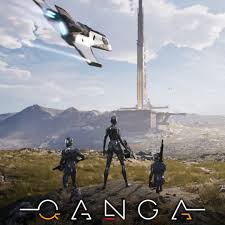
The narrative premise is one of haunting desperation: human consciousnesses, preserved in ice, are transplanted into synthetic cyborg bodies to navigate a devastated solar system. This journey begins in East Africa at a Refuel Tower, where the player is thrust into a world scarred by climate disasters and biological mutations. The primary antagonists are the Sanglines—creatures born from bacterial mutations released by melting glaciers. While the story provides a grim backdrop for exploration, much of the moment-to-moment experience is driven by the hunt for the mysterious Yellow Wall. This objective pushes players across the Earth’s surface and into the stars, though the narrative is currently more of a loose framework for systemic survival than a linear cinematic tale.
The Seamless Dance of Man and Machine
One of the most impressive technical feats is the total absence of loading screens. Players can walk onto a ship, pilot it out of the atmosphere, and land on another celestial body without a single break in immersion. The gameplay loop focuses heavily on resource management, trading, and contract completion. These contracts, obtained from NPCs at Refuel Towers, serve as the primary source of XP and currency. Movement is governed by a modular system; for instance, the Thruster Module reacts dynamically to gravity and current velocity, making atmospheric re-entry a genuine hazard where excessive speed leads to catastrophic ship failure.
Iron Sights and Drone Eyes
The combat system allows for a fluid transition between first-person and third-person perspectives, facilitated by a physical companion drone. This is not just a camera toggle; the drone is an actual entity in the world that can be destroyed, stripping the player of their tactical third-person view and forcing a more claustrophobic, personal first-person encounter. Weaponry ranges from the Nash Pistol to heavy Sniper Rifles, all featuring simulated recoil and storage costs. Beyond combat, the sandbox nature of the world allows for base building on asteroids and the deployment of various vehicles, from hovercrafts that require careful braking management to high-speed warp-capable ships.
Galactic Cooperation and Private Frontiers
Multiplayer is integrated as a core pillar, offering both official servers and the ability for players to host their own private communities. The experience is fully cooperative, allowing groups to share a cockpit, tackle contracts together, and participate in PvP challenges. This social layer helps mitigate the inherent loneliness of the vast 1:2 scale map. The contract system supports this by allowing missions to be executed solo or with friends, though the current build limits players to holding only one active contract at a time to ensure focused progression.
Binaural Echoes in the Void
Visually, the game leverages high-fidelity rendering to depict a ruined Earth and the stark beauty of the Moon. The inclusion of Lumen technology provides cinematic lighting, though it is demanding on hardware. The audio design is particularly noteworthy, utilizing 3D binaural audio with HRTF. This creates a spatial soundscape where the hum of a ship’s reactor or the screech of a Sangline is accurately positioned in three-dimensional space. However, this visual ambition comes at a cost, as mid-range systems often struggle with performance when the more advanced rendering features are enabled.
The Endless Horizon
The sheer scale of the recreated solar system provides a massive canvas for replayability. Because players can build bases anywhere—on a desolate planet or a floating rock in space—the endgame is largely defined by player agency and community interaction. The ability to restart a journey with different modules or focus on a different career path, such as an elite pilot or a tactical mercenary, keeps the loop from becoming entirely stagnant. However, the current lack of NPC density in certain stations means that much of the long-term enjoyment relies on the player’s willingness to find their own fun within the sandbox.
Conclusion
The experience is a technical marvel of scale that occasionally trips over its own ambition. It offers a level of freedom rarely seen outside of the most expensive triple-A projects, yet it retains the rough edges and “jank” typical of a dedicated indie team working in early access. The foundation is robust—the flight models, the seamless transitions, and the atmospheric physics are all there—but the world often feels like a beautiful, cavernous stage waiting for more actors to arrive. It is a journey for those who value the process of discovery over the polish of a finished product.
Pros
- Seamless travel between planets and space stations with no loading screens.
- Impressive 1:2 scale solar system providing a massive sense of scale.
- Unique drone-based perspective system that adds a tactical layer to combat.
- Immersive 3D binaural audio that enhances the atmosphere.
Cons
- Steep learning curve and demanding hardware requirements.
- Many interior locations and stations currently feel empty and lack NPC life.
- Presence of early access bugs, such as foliage rendering issues and UI glitches.